
Stage 1
Proximity
Look, Listen & Learn
Community decides which problems the work addresses.
Who closest to this problem have you not listened to yet?
Stage 2
Power
Co-Design
Paid lived experts review each design iteration.
Where could you hand over real decision-making?
Stage 3
Platform
Build
Lived experts co-write AI knowledge and sign off.
What could you build to amplify a voice that is usually unheard?
Stage 4
Position
Reskill, Train & Hire
Participation becomes a pathway into paid roles.
What will you do with your seat to make this stick?
The spirit of Ayllu
Built with us, not for us.
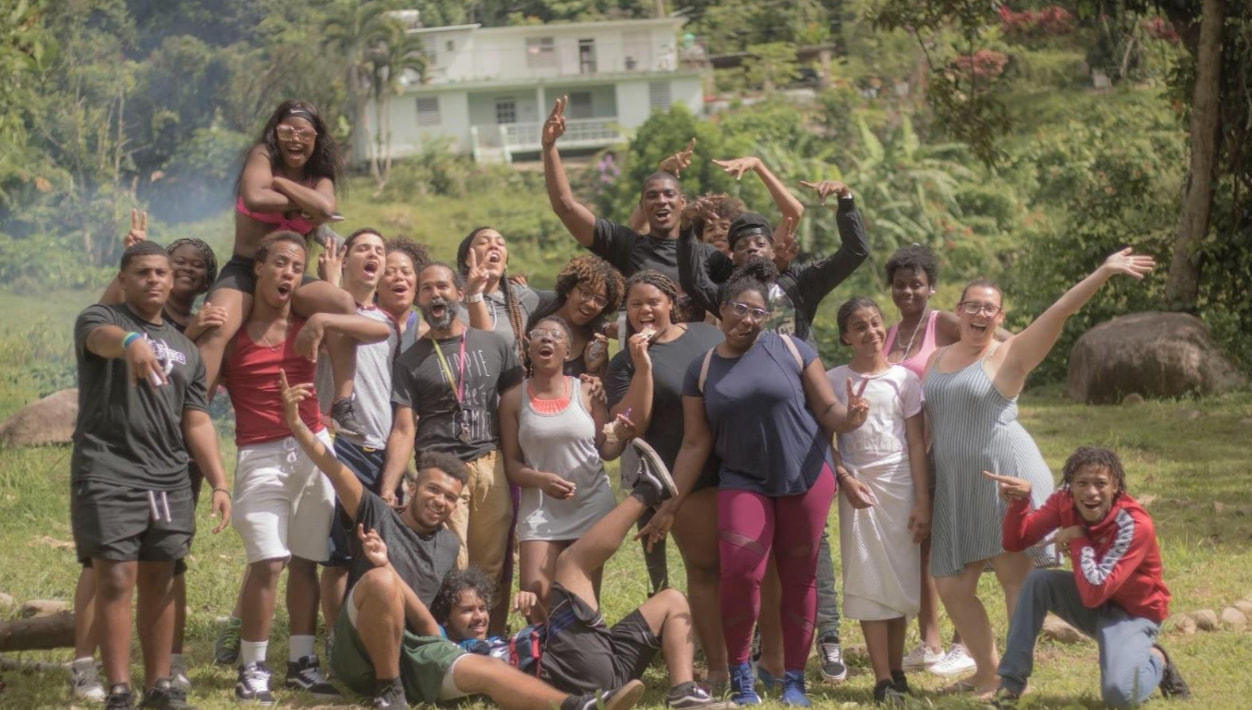
Technology is reaching families before they have any say in it. We build with youth, parents, caregivers and community partners, alongside the agencies that serve them.
U Navigate is live.
Four illustrative cases, built from the real product. Each one is an invented young person in a real situation.
- Housing
- In crisis
Jada, 19
At eleven at night, with no caseworker, she got a straight answer and a next step.
Watch Jada’s caseThree more cases: Amara, Theo, Nia.
See all four casesJada’s case, 10-second loop
1080 × 2340 px
The problem
Technology is arriving before authority.
Communities are asked for their stories early, then asked to test a finished product at the end. The decisions that matter in between are made without them.
Tools miss real life.
A product designed around system needs may not fit how families and frontline staff actually move through services.
Trust erodes.
Families are asked to rely on tools they had no part in shaping, often at the hardest moments of their lives.
Expertise goes unpaid and unused.
The knowledge closest to the problem stays outside the room where choices are made.
Built with us.
Who we build with
One circle, many seats
Public systems touch a whole circle of people. Everyone in it has a seat, and the people who live the outcomes hold the vote.
Live the outcomes, hold design authority
Youth and young adults
Navigating care, transition and independence.
Parents and caregivers
Including birth, kinship, foster and adoptive families.
Families and community members
Seeking housing, benefits, health and support.
Carry the work, share power and position
System professionals
Including caseworkers, supervisors, trainers and agency leaders.
Community partners
Including providers, schools, nonprofits and faith organizations.
AIEYU began with a co-founder's experience of growing up in foster care. Its work now reaches every family, professional and community partner that public systems touch.
Say it: eye-you
Ayllu
An ancient Andean idea of kinship: a community bound by mutual care and shared work, where everyone is connected and communities govern and support themselves.
AIEYU carries that spirit into technology. We use modern tools to rebuild the connected safety net that defines a true community, so nobody has to face a complicated system alone.
- Our mission
- We work with the people closest to public systems to build and govern technology that strengthens community, protects dignity and expands opportunity.
- Our vision
- A future where people with lived experience have more than a voice in the systems that shape their lives. They have a vote.
Continuous community co-design model
A continuous loop, not a one-time rollout.
Four stages, each anchored by one of the 4P's: Proximity, Power, Platform, and Position.
Then back to the community. Every solution starts, and stays, in conversation with the people who use it.
From voice to vote
Being heard is not the same as holding power.
Most systems consult people with lived experience. Few share real decision-making power, and that gap shapes every policy, system build, and AI tool.
Level 1
Token
A seat or a story, with no say in what happens next.
Level 2
Consulted
Input is requested after the plan is drafted.
Level 3
Paid partner
Expertise is paid for, and the final call sits elsewhere.
- The gapCo-creation begins at Level 4.
Level 4
Shared authority
Lived experts hold votes and sign-off on defined decisions.
Level 5
Lived-expert led
Lived experts set the agenda and oversee AI tools.
Crossing from Level 3 requires a structural change, because better listening alone leaves the final decision in the same hands.
AIEYU builds the bridge.
What we have built
We heard. We learned. So we built.
U Navigate is live. Everything we build after it starts the same way.
We heard
Youth age out with no single place to turn for housing, benefits or support.
We learned
Transitioning youth need one door into the services that already exist.
So we built
Amara’s case, 10-second loop
1080 × 2340 px
Every tool reaches a person.
AIEYU builds for everyone in the community, starting with the people closest to the problem.
U Navigate
LiveResources in their pocket, without the maze. And a shared view for the people who support them.
Youth, Families, Frontline staff, LeadersU Lexi
NextAn always-on partner, on call for real questions.
Frontline staffU Insight
NextPredictive and prescriptive analytics for communities, frontline staff and leaders.
Families, Frontline staff, LeadersU Core
NextShared visibility that turns real-world data into coordinated action.
LeadersU Realm
NextImmersive learning that builds capacity for community and staff together.
Youth, Families, Frontline staffU Gauge
NextReadiness assessments that surface gaps and prepare systems for scale.
Leaders
U Navigate
LiveResources in their pocket, without the maze. And a shared view for the people who support them.
U Lexi
NextAn always-on partner, on call for real questions.
U Insight
NextPredictive and prescriptive analytics for communities, frontline staff and leaders.
U Core
NextShared visibility that turns real-world data into coordinated action.
U Realm
NextImmersive learning that builds capacity for community and staff together.
U Gauge
NextReadiness assessments that surface gaps and prepare systems for scale.
What data makes possible
Your report shows what happened. Data shows why.
Four people, four problems, and what data changes for each. Every number comes from published research.
U Insight Next is being built to do this with agencies and communities.
A young person leaving care: step 1 of 4, Without data
Care ends at 18, and no one tracks where they land.
Between 31 and 46 percent experienced homelessness by 26.
Dworsky, Napolitano and Courtney, 2013
Experienced homelessness by 26: 31% to 46% Caseloads climb with no warning. Workers burn out and leave.
Median frontline turnover is about 22 percent a year.
Edwards and Wildeman, 2018
Every handoff costs the child. With one caseworker, 74.5 percent of children reached permanency. With two, 17.5 percent.
Flower, McDonald and Sumski, 2005, Milwaukee
Frontline caseworkers who leave each year (median): 22% No car, and no route to where the jobs are.
Shifts are missed, jobs are lost, and rent falls behind.
By 19, the federal survey reaches only about half of the young people it set out to follow.
Okpych, 2024
Budgets get set on reports about the past.
Young people the federal survey reaches by 19: about 50%
For the people who live these problems every week
How we find what a report can't show
A report shows one number at a time. Machine learning looks across many at once: where people live, which services they used, who their caseworker was, what the job market and transit look like. It finds the patterns no single report or person reading it can see, then tests which fix actually moves the outcome.
A report1 number
- Where people live
- Services used
- Caseworker
- Job market
- Transit
ForecastingIllustrative shape, not real data
- The problem you know:
- Every winter the placement beds run out, and you find out the week it happens.
- What this does:
- It reads past years, seasons and intake together to show what’s coming, months ahead.
- What changes for you:
- You open beds and hire before the surge, not during it.
A demand line runs up to today, then a projected range continues ahead. A capacity line steps up just ahead of the projected demand. Callouts: Last year’s intake. Today. The surge, seen in advance. Beds and staff added before they’re needed.
- 29research projects mapped across these four methods
- Nationalfederal child welfare data, used under a research license
The studies above show what's possible. Our models are built to find which of these fixes your community needs.
We model systems and communities, never individual children or families. No risk scores.
Bring one outcome you can't explain. We'll show you how we'd find the why.
Partner with usInsight looks at trends. Surveillance looks at people.
Trust, in four positions
Technology should humanize and never harm.
Data ownership
Young people own what they share. Access is theirs to grant, not ours to assume.
Consent
Consent lives at the point of sharing, not buried in a policy no one reads.
Human judgment
A human stays the decision-maker in every sensitive moment.
Purpose
We build to understand patterns and support people, never to watch them.
Everyone at the same table.
Young people, caseworkers and attorneys, each with a seat.

A young personEligibility scattered across programs
A caseworkerPaperwork chased the week it’s needed
A children’s attorneyA record the young person owns and chooses to share
A young person at 11pmA straight answer from Lexi, any hour
Who we are
The people building it.
One more thing…
Move from voice to vote.
Start with one seat, one decision or one conversation.
Partner with us
Agencies and leaders
Add two or more lived experts with decision-making power to each working group.
Partner with us